
How I reduce my cognitive load
Three years ago, when I finally received the confirmation that I did have ADHD, I can honestly say a weight was lifted off my chest. I like many other women diagnosed in my thirties had spent years shaming myself and wondering what was wrong with me. Why did I struggle so much to do such minor things. And why on earth could I get it all done at the eleventh hours? And why oh why did I lack motivations? I felt lazy, anxious and beat up.
Now I understand that I'm none of those things. I just work a little differently and need to be building my habits and routines to ensure that I am getting my brain to work for not against me. It took a really long time to figure out how balance a brain that needs habits, routines and rituals but gets bored with the same old stuff. I've finally found this by creating a harmony amongst the things that have to happen and creating excitement and spontaneity with other things.
First and foremost, take your fucking medicine, but make sure it's working correctly for you. Please ignore anyone who makes you feel like you shouldn't take medications for your mental health. If you are on medication but still struggling, talk to your doctor about dosage changes and genetic testing. It is not cheap, but after receiving my genetic tests, I learned that the medications I was taking (at high dosages) were not right for me. My body didn't break them down efficiently and so the medicine wasn't supporting my brain in the way it should. We tried an alternate medication that my body was aligned with and it completely changed how I was feeling in the best way.
After I finally got my medications sorted, I began to look at my habits and routines. Even though I felt in better control of my anxiety and my ADHD, I was still having moments where I felt completely overwhelmed. Or moments when I was stuck in a decision paralysis. I also realized that while my mental health was improving, my physical health was still suffering. So I said to myself, "What can I do to make sure I'm taking care of myself even when I'm completely overwhelmed?"
I am happy to say I have finally found something that actually works for me. Most of what it asks of me is to either make my decisions in advance when I am calm or eliminating as many small decisions as I can. Basically, I reduced my cognitive load so the I can use my brain on the decisions that actually matter.
The first thing that matter is planning and resetting myself each week and month. At the end of each month/start of the next month, I look at my calendar and I identify when I'm going to be traveling, when I have big deadlines for work and when I have special events. Looking at all of that, I will then pencil in when I have days of calm to do my weekly reset and planning.
Weekly Reset and Tasks
- I set up my weekly planner and do a review of the past week. I identify when special events are and when I will be going into office or traveling. Then I schedule workouts or other self care like seeing friends.
- I like to do a brain dump and try to schedule work blocks for specific big tasks. This doesn't always happen but it can be helpful, especially if I have a lot going on that week.
- My weekly review gives me a chance to see how I'm doing moving towards goals. It also gives me the chance to re-align any goals that have gone awry or add something if I feel like I need a change.
- Based on my schedule for the week, I pick out all of my outfits for the week, including jewelry, undergarments and bags. I try these on and make sure everything "works." I also pick out two extra outfits. This is just in case I wake up and suddenly hate the outfit or if something happens to the outfit that renders it unwearable, e.g., I pour coffee all over myself on the way out the door.
- I take 15 minutes to divvy out my morning and evening supplements and medications into a.m. and p.m. pill pouches. This helps take the guess work out of "did I take my medicine today?" It also means I don't have to open a bunch of bottles each morning. I just grab my pouch and go.
- I meal plan dinners and select a daily breakfast for the week. I plan dinner with L and try to include a couple of alternates in case something goes horribly awry. I try to plan to eat the same breakfast each day. I don't have time in the mornings to be thinking about breakfast or making something. So I select something nutritious I know that I will love that can be prepped in advance and eaten all week. I will then grab the groceries I need and will prep that breakfast.
- I tidy up around the house so that any chaos is wrangled. I don't recommend a deep clean because that just adds stress. Instead, it is making sure my desk, nightstand and dinner table are cleared off. I fold up any blankets piled on the couch and make sure any clothes are put away.
Ideally this all of this happens on Sundays, so that I feel ready for the week ahead, but that is just not always feasible. For example, this month, I will be away twice on Sundays. When that happens, some tasks occur a day or two before my trip like weekly planning, medicine prep and outfit selection. Others happen quickly on Sunday in the midst of the events of the day like the weekly review.
Reducing real decisions
These are all the things I do generally in order to reduce the number of decisions I make every single day.
- I have a basic go to make up that makes me feel confident and only takes about 5 minutes beginning to end. I can add to it if I want to be "fancy" but by and large I don't deviate.
- I have a very pared down skincare routine. It doesn’t matter if I’m exhausted or running late, the morning is two steps and the nighttime is three steps. I can do it every single day without thinking about it no matter where I am.
- I am traveling a ton this year. I bought extras of everything I need for travel so that I don’t have to think through what needs to be packed. All of the toiletries and makeup stay packed in my hanging dopp kit in my suitcase. If I have empties, I will refill when I get home and am unpacking so that I know it’s ready to go.
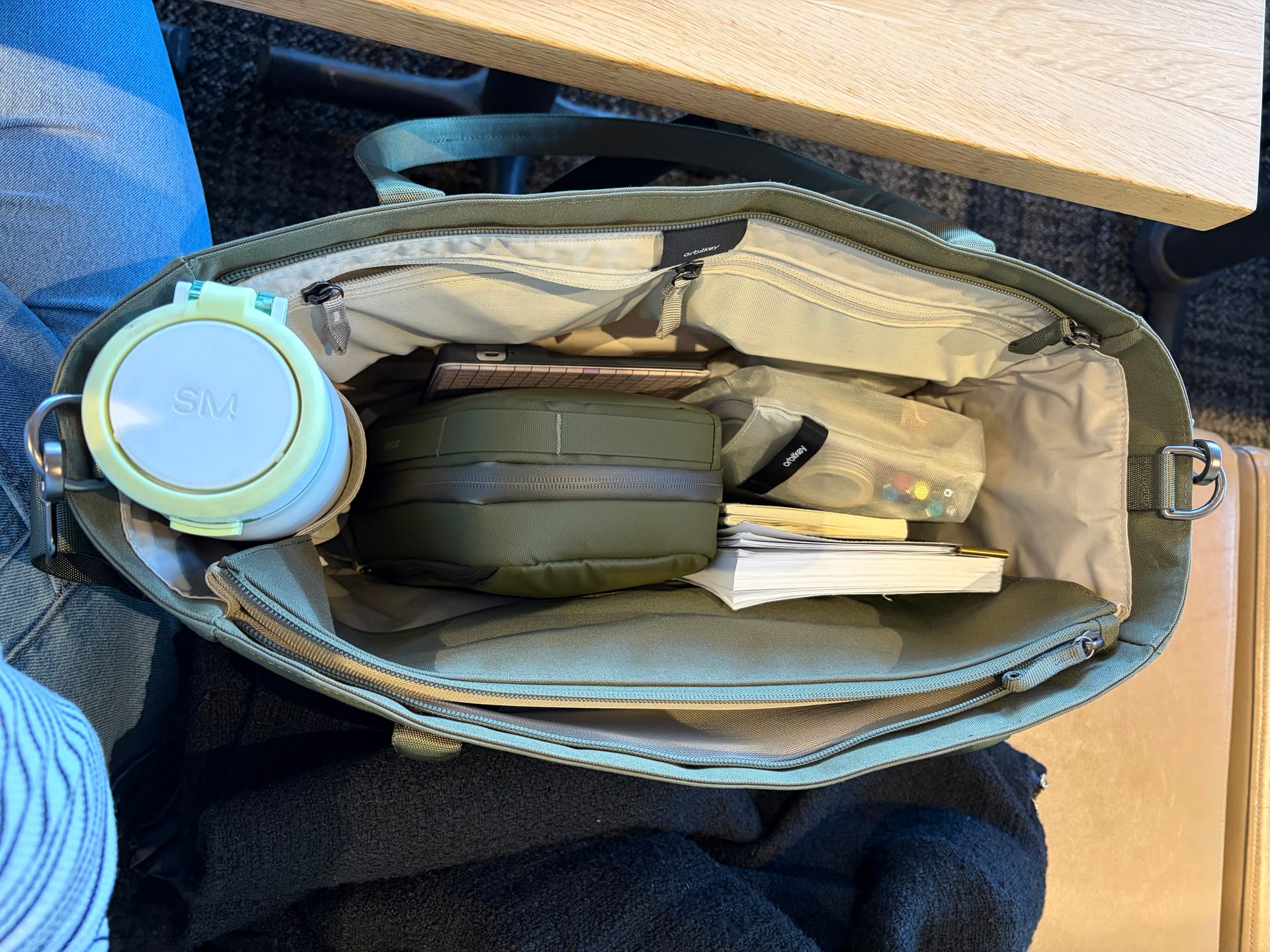
- All of the items I need in my work bag are in easily transferable pouches that can be dropped into any bag I own. I have a small pouch for lip gloss, lotion, hair tie, antacid, and pain meds that can slip into even my smallest purses. A medium pouch includes pens and additional good to haves, like a jaw clip, gum and my mini tarot deck. A larger one has snacks and items that I need when I am traveling for more than a day, like mouthwash and dry shampoo. I have a tech pouch that keeps all of my cords, cables, mobile hotspot and battery packs.
- A notebook, planner and water bottle get tossed into any bag that it fits in. I use a digital planner but I find that I conceptualize how busy I am if I am able to see my week handwritten out. My notebook is what I've seen described as a "chaos notebook." I remember things better if I write them down by hand. I also just love the tactility of handwriting on paper. I keep a notebook next to me at all times and will write in it throughout the day. In the evening or the following morning, I try to go through it to digitize. Any incomplete tasks get imported into my digital task manager. I cross off anything I've already done or is now irrelevant. Any notes from meetings or thoughts for future work get put in their relevant digital locations so that they are preserved. This helps keep my brain clear from remembering, something that almost never happens.
- I always keep the ingredients on hand for one or two "go-to" meals that take me less than 30 minutes to make. This helps if work has been especially tough or if I'm just not feeling great. L and I can still have a home cooked meal (cutting down on ordering out) but without significant fuss. It also give my brain the feeling that I'm being spontaneous and abandoning my meal plan.
- I pack my work bag the night before. In the morning I am focused on getting out the door and won't remember everything. I'm already distracted thinking about everything I have to do. If I pack my work and gym bag and put them side by side by the front door, I'm significantly less likely to forget what I need.
Seriously, none of this is new. These are all well-documented tactics. I hope, though, that someone with anxiety and ADHD saying I actually do these things and it actually helps, will have an impact on someone. This isn't some productivity guru or someone with 3 assistants saying it. This is your average 36-year-old who is just trying to get through each day.
Subscribe to my newsletter to get the latest updates and news
Member discussion